





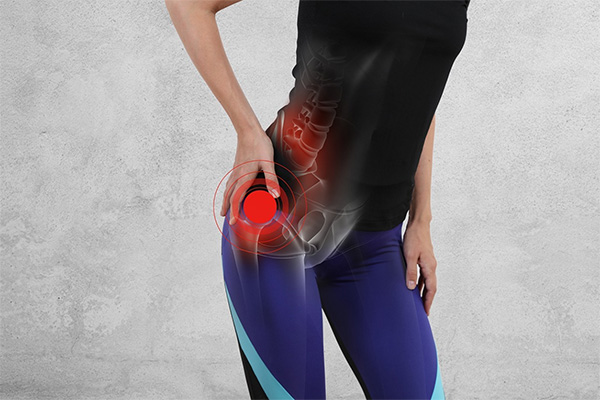
Hip pain has a way of creeping into everything, from your morning run along the Hudson to the drive home on Route 4. Not every painful hip needs an operation, and not every hip problem can be fixed with a scope. The key is finding out what is actually causing your pain. Here is a look at the hip conditions that respond well to arthroscopy and what makes someone a good candidate.
What Is Hip Arthroscopy?
Hip arthroscopy is a minimally invasive procedure in which a surgeon views the inside of the hip with a small camera and repairs damage using thin instruments. It is usually performed through 2 to 4 small incisions of about 5 to 10 millimeters, and the procedure typically takes 30 to 120 minutes. Because the incisions are small, patients often have less pain and stiffness and a quicker return to favorite activities than with open surgery.1
Hip arthroscopy may relieve painful symptoms of many problems that damage the labrum, articular cartilage, or other soft tissues around the joint.1 The sections below walk through the causes it addresses most often.
Is Femoroacetabular Impingement Causing Your Hip Pain?
Femoroacetabular impingement, or FAI, occurs when extra bone grows along the ball, the socket, or both, so the bones do not fit together perfectly and rub during movement.2 There are three types:
- Cam impingement, where the ball is not round and a bump grinds the cartilage inside the socket2
- Pincer impingement, where extra bone extends over the rim of the socket and can crush the labrum2
- Combined impingement, where both are present, which is the most common pattern
FAI is the most common underlying cause of hip labral tears. During arthroscopy, the surgeon can reshape the bone so the joint moves without pinching. Our femoroacetabular impingement page explains the workup in detail.
Could a Labral Tear Be the Source?
The labrum is a ring of cartilage that seals the hip socket and helps keep the ball in place. When it tears, the pain is often felt deep in the groin, though it can show up on the side of the hip or in the buttock. Every effort is made to preserve the labrum. Depending on the tear, it may be repaired or, when the tissue cannot be saved, reconstructed. Our pages on hip labral repair and hip labral reconstruction describe both approaches.
What Other Hip Conditions Can Arthroscopy Treat?
Cartilage Damage and Loose Bodies
Small fragments of bone or cartilage can break free and float inside the joint, causing catching or locking. Arthroscopy can remove loose bodies and address focal chondral lesions.
Synovitis
The lining of the joint can become inflamed and painful. When this persists, the inflamed tissue can be removed during arthroscopy.1 Our page on hip synovitis has details.
Snapping Hip and Bursitis
Snapping hip syndromes, where a tendon rubs across the joint, are often harmless and do not need treatment, but a tendon damaged by repeated rubbing can be treated with arthroscopy.1 Persistent trochanteric bursitis on the outside of the hip may also be addressed when conservative care fails.
Gluteus Medius Tears
Runners and soccer and basketball players can tear the gluteus medius tendon on the outside of the hip, which may cause a limp. An arthroscopic gluteus medius repair reattaches the tendon to bone.
Hip Instability
Looseness of the joint, whether from injury or anatomy, can strain the labrum and surrounding tissues. When conservative care does not resolve symptoms, surgery may be arthroscopic or open, depending on the problem.
Why Is Hip Pain So Often Misdiagnosed?
Hip problems can mimic other conditions. Labral tears are sometimes mistaken for low back pain, sacroiliac joint pain, trochanteric bursitis, piriformis syndrome, iliopsoas problems, a groin pull, or a sports hernia. A careful exam and the right imaging help sort this out. Imaging often includes radiographs with special views, an MRI arthrogram or high resolution MRI, and in some cases a 3D CT scan. A cortisone injection into the joint can also help confirm whether the pain truly comes from inside the hip.
Are You a Good Candidate for Hip Arthroscopy in New Jersey?
You may be a candidate if:
- Your pain has not improved after about 3 to 6 months of nonsurgical care such as rest, physical therapy, and injections1
- Imaging shows a specific structural problem that matches your symptoms
- Your cartilage is still in reasonably good condition
Arthroscopy may be less helpful when damage is advanced. Sometimes the damage is severe enough that it cannot be completely reversed, and the procedure may not be successful.1 For significant osteoarthritis of the hip, other treatments may be more appropriate.
Frequently Asked Questions
Is hip arthroscopy an outpatient procedure?
Yes. Hip arthroscopy is an ambulatory procedure, so you usually go home the same day.1
How long does recovery take after hip arthroscopy?
Most people walk relatively pain free by about 8 weeks, while elite athletes may need 6 months or more to return to full competition.
What is the most common cause of a hip labral tear?
Femoroacetabular impingement is the most common underlying cause of hip labral tears.
Can hip arthroscopy help if you have arthritis?
It depends on how advanced it is. When damage is severe, arthroscopy may not be successful and other treatments may be considered.1
Where can I see a hip arthroscopy surgeon in New Jersey?
You can schedule a hip evaluation at our Englewood, New Jersey office on South Dean Street. We also see patients at our office on East 86th Street in Manhattan.
Find the Cause of Your Hip Pain in Englewood, New Jersey
The right treatment starts with an accurate diagnosis. If hip pain is limiting your activity, you can arrange a consultation in Englewood or Manhattan to find out whether arthroscopy or another approach suits your hip.
References
- Alaia MJ. Hip Arthroscopy. OrthoInfo, American Academy of Orthopaedic Surgeons.
- Witstein JR, oulcahey MK. Femoroacetabular Impingement. OrthoInfo, American Academy of Orthopaedic Surgeons.
About Dr Youm: Thomas Youm, MD is a board-certified orthopedic surgeon specializing in hip arthroscopy and joint preservation. He completed a Sports Medicine fellowship at the Kerlan-Jobe Orthopaedic Clinic and is a member of leading organizations including the American Academy of Orthopaedic Surgeons and the International Society for Hip Arthroscopy. Dr. Youm has published over 150 articles and delivered more than 300 presentations on orthopedic sports medicine.