





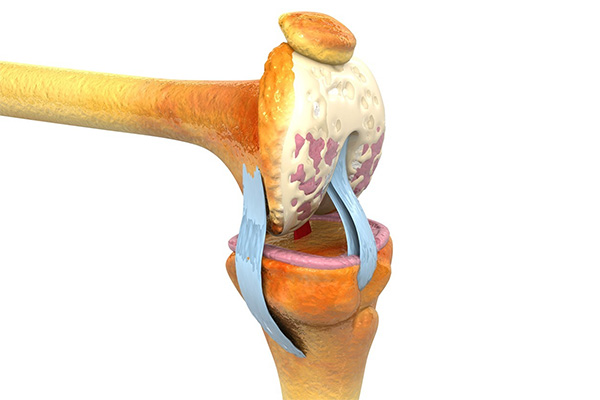
If knee pain is limiting your runs, your tennis matches in North Jersey, or simply your walk up the stairs, you may assume a replacement is the only lasting fix. For many active people, it is not. Knee preservation focuses on protecting and restoring the joint you already have. Here is a closer look at the problems a knee preservation surgeon treats and the options that may keep you moving for years.
What Is Knee Preservation Care in Englewood, New Jersey?
Joint preservation for the knee aims to repair damaged tissue, correct the mechanical problems that wear a joint down, and delay or avoid joint replacement. It often suits active adults whose knee damage is limited to certain areas rather than spread across the entire joint.
Many of these procedures are performed with knee arthroscopy, in which a small camera and thin instruments are inserted through tiny incisions. Because the incisions are small, patients often have less pain and stiffness, and recovery time is often shorter than with open surgery.1 If you are generally healthy, knee arthroscopy is most likely performed as an outpatient procedure, so you go home the same day.1
Can a Torn Meniscus Be Saved Instead of Removed?
The meniscus acts as a shock absorber between your thighbone and shinbone. Whenever possible, preservation means keeping as much of it as you can, because losing meniscus tissue can increase stress on the cartilage.
Whether a tear can be repaired depends largely on where it sits. The outer third of the meniscus has a rich blood supply, and a tear in this zone may heal on its own or can often be repaired with surgery.2 Tears in the inner two thirds lack that blood supply and are less likely to heal, so the damaged portion is often trimmed instead.2 Your treatment also depends on the type and size of the tear, your age, and your activity level. Our page on meniscal surgery explains repair, partial removal, and replacement options.
How Is Damaged Knee Cartilage Restored?
The smooth articular cartilage that covers the ends of your bones has a limited ability to heal. A focal defect, meaning a localized area of damage, can cause pain, swelling, and catching, especially in active people.
Cartilage restoration options include:
- Debridement to smooth loose or unstable cartilage edges
- Microfracture to stimulate new tissue to fill a small defect
- Cartilage transplantation for larger defects
These procedures are designed for defined areas of damage. They are not intended for advanced arthritis that affects the whole joint. Our pages on cartilage repair and transplantation and articular cartilage defects go further.
Can Correcting Leg Alignment Protect Your Knee?
Sometimes the problem is not a single tear but how weight passes through your leg. Bow legs or knock knees can overload one side of the knee and lead to early wear of the joint.
A high tibial osteotomy, or HTO, reshapes the upper shinbone to shift weight away from the worn side of the knee toward healthier cartilage. Our practice uses the iBalance system, which relies on a nonabsorbable PEEK implant rather than metal plates. PEEK is more biologically friendly to bone and may avoid a later operation to remove painful hardware. By correcting alignment, an HTO may delay or even avoid a total knee replacement. Your return to sport after an osteotomy depends on healing and your rehabilitation progress.
What Can Be Done for a Kneecap That Keeps Slipping?
The kneecap glides in a groove at the end of the thighbone. When it slips out of place, the medial patellofemoral ligament, or MPFL, is often damaged. This ligament is a major stabilizer of the kneecap, and it can be injured by a direct blow, a twisting injury, or a sudden change of direction.
Repeated dislocations can harm the cartilage behind the kneecap. If physical therapy and bracing do not keep the kneecap stable, MPFL reconstruction uses a tendon graft to rebuild the ligament.
What Is Subchondroplasty?
Some knee pain comes from the bone just beneath the cartilage. Imaging may show chronic bone marrow edema, an area of inflammation surrounding tiny fractures or defects in the bone. Subchondroplasty is a minimally invasive procedure that fills these defects with a hard setting bone substitute to support the weakened area.
Does Knee Preservation Include Ligament Repair?
Yes. A stable knee protects its cartilage and meniscus. Returning to activity on an unstable knee after an ACL tear risks further damage to surrounding structures.3 When the knee keeps giving way, ligament reconstruction can restore stability.
Frequently Asked Questions
Who is a good candidate for knee preservation?
Active adults with damage limited to specific areas of the knee are often good candidates. Advanced arthritis throughout the joint is usually better treated in other ways.
Is knee arthroscopy an outpatient procedure?
Yes, in most cases. If you are generally healthy, knee arthroscopy is usually performed on an outpatient basis and you return home the same day.1
Can a high tibial osteotomy delay a knee replacement?
Yes. By shifting weight toward healthier cartilage, an HTO may delay or even avoid a total knee replacement in the right patient.
Why does the location of a meniscus tear matter?
The outer third of the meniscus has a strong blood supply and is more likely to heal or be repaired. Inner tears have limited blood flow and are less likely to heal.2
Where can I see a knee preservation surgeon in New Jersey?
You can schedule a knee evaluation at our Englewood, New Jersey office on South Dean Street. Appointments are also available at our office on East 86th Street in Manhattan.
Protect Your Knee With Care in Englewood, New Jersey
The earlier knee damage is identified, the more options you may have to preserve your joint. If knee pain is changing the way you move, you can schedule a consultation in Englewood or Manhattan to find out which preservation options fit your knee and your goals.
References
1. Alaia MJ, Wilkerson R. Knee Arthroscopy. OrthoInfo, American Academy of Orthopaedic Surgeons.
2. Wittstein JR. Meniscus Tears. OrthoInfo, American Academy of Orthopaedic Surgeons.
3. Williams HA, Kennedy OT. Anterior Cruciate Ligament (ACL) Injuries. OrthoInfo, American Academy of Orthopaedic Surgeons.
About Dr Youm: Thomas Youm, MD is a board-certified orthopedic surgeon specializing in hip arthroscopy and joint preservation. He completed a Sports Medicine fellowship at the Kerlan-Jobe Orthopaedic Clinic and is a member of leading organizations including the American Academy of Orthopaedic Surgeons and the International Society for Hip Arthroscopy. Dr. Youm has published over 150 articles and delivered more than 300 presentations on orthopedic sports medicine.